WHAT CAN BE DONE?
AN OLD SOLUTION,
TO A NEW PROBLEM:
A RUBBISH IDEA
The Rubbish
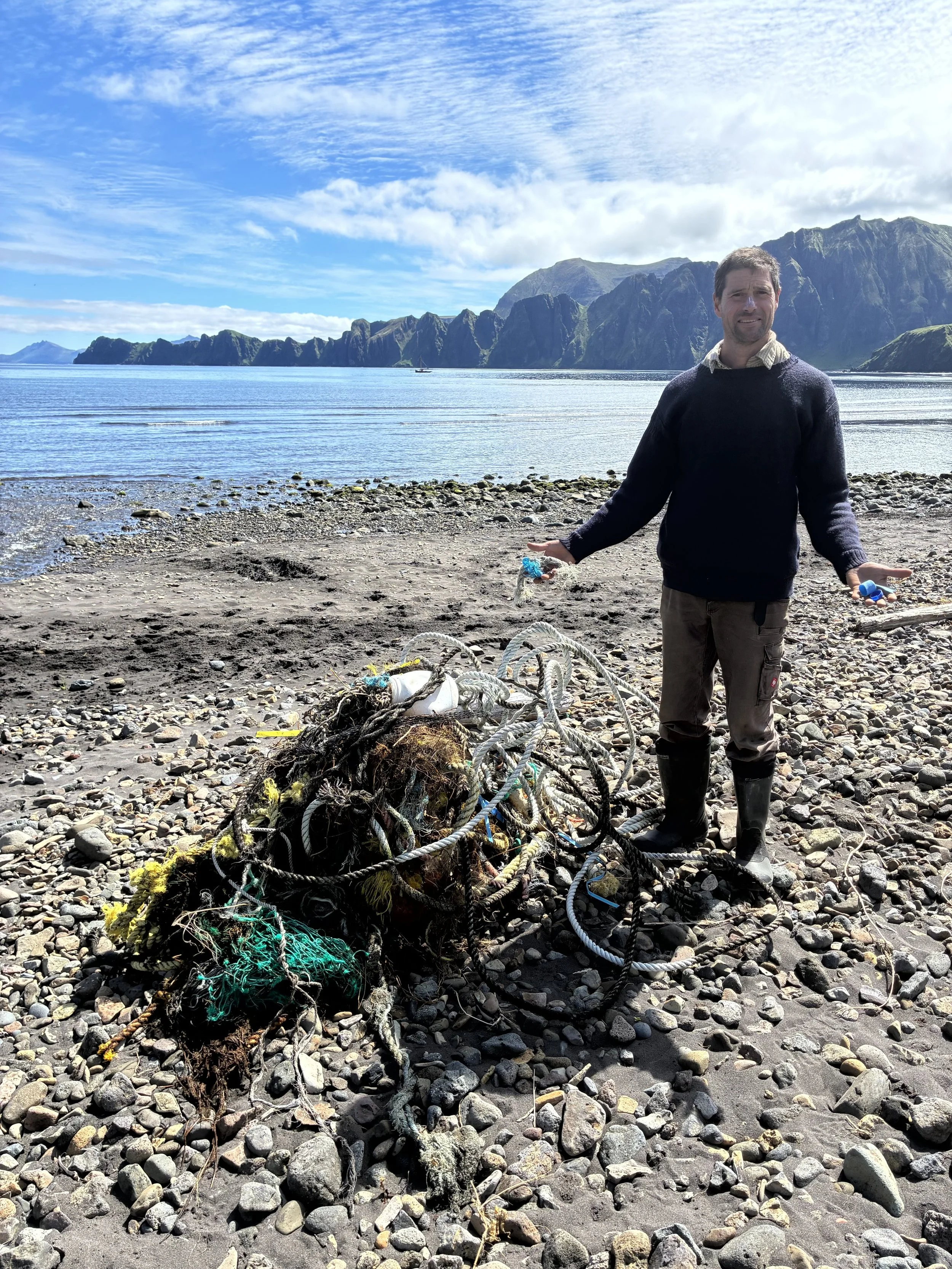
From 20 years of Arctic sailing expeditions, my enduring impression has not been northern lights, a polar bear, ice filled seascapes nor breathtaking mountain views.
My enduring impression is that there is plastic everywhere. The quantity is shocking.
I see it in the sea far offshore. I see it in on beaches and shorelines, tangled up amongst driftwood, sand and stones.
It stays on the beach, gets ground up and returns to the water as microplastics, which are unrecoverable.
Whilst the plastic is out at sea there is little we can do. On the shore we can make a difference.
The Idea
Direct my two niche skills that are not very useful to society (repairing and maintaining wooden ships / sailing in remote locations) in order to benefit the environment.
To collect ocean plastics from remote Arctic beaches where it is known to collect, before it has a chance to break down further into micro plastics which are unrecoverable.
By engaging government bodies in their respective countries we can deliver the collected plastic to pre-arranged recycling centres.
Offer a platform for research and an opportunity to study ocean plastic trends in the Arctic.
Ultimately the solution is at source. We will raise awareness to assist leading scientists within the field to put pressure on making vital changes at the source of the problem.
2026 A Trial Collection
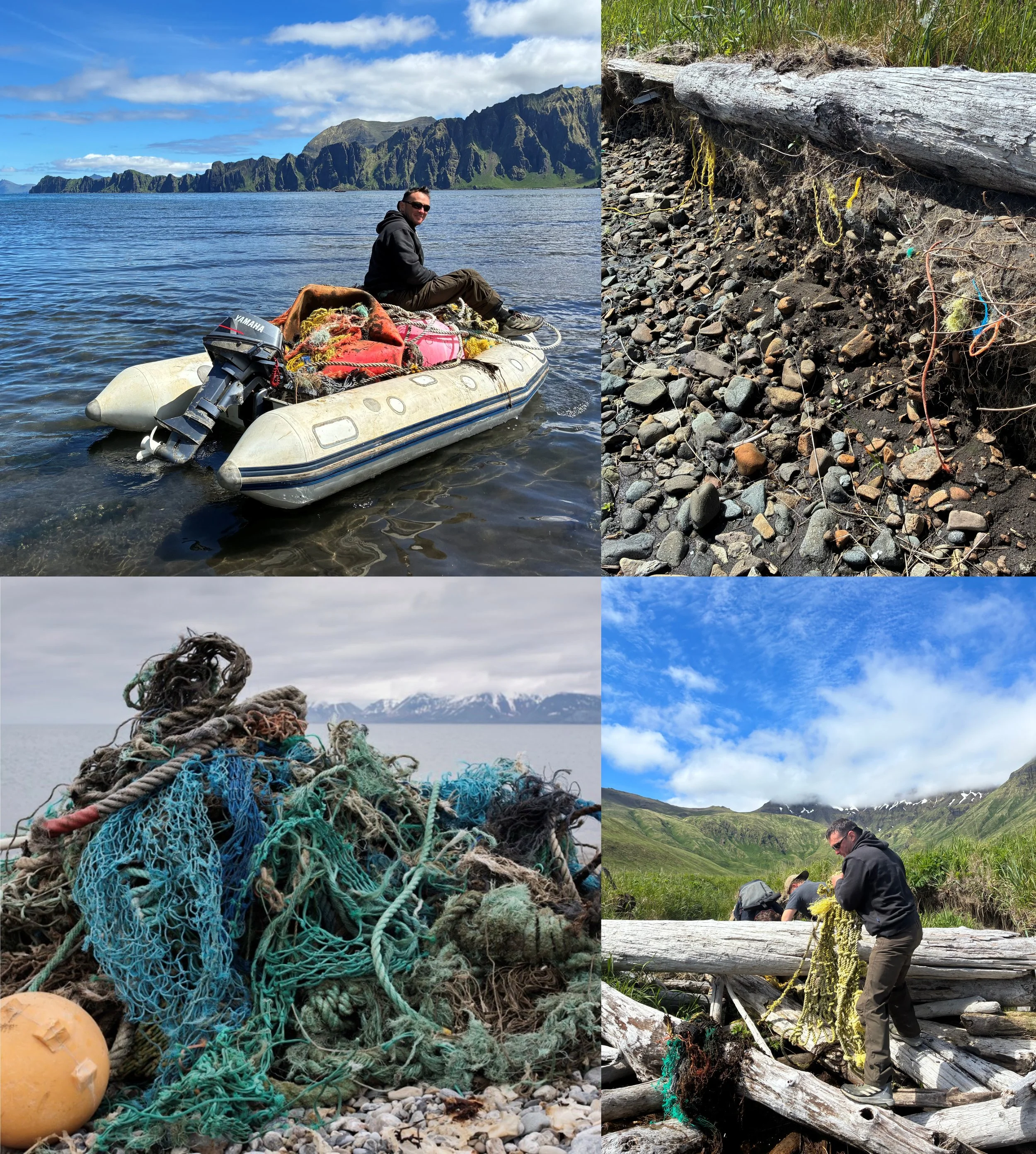
In 2026 on this remote sub-Arctic beach the plastic lay half buried in the sand. To our surprise, it was also in sedimentary layers, woven into the fabric of the earth that backed the beach.
In fifteen minutes four people had collected a dinghy full, estimated at 150kg. Whilst the majority of the waste was fishing gear there was also a good representation of domestic plastic.
The domestic plastic by weight proportion was much less than the fishing gear but by quantity of items was greater and broken down into smaller pieces which are more time consuming to collect.
The waste was returned to a remote harbour where it was responsibly disposed in designated bins.
The vessel was only 23 tons and, with limited deck space needed to work the sails, only one load was removed. It is estimated that eight persons could clear this beach in six days of labour.
That is one beach, so the task is Herculean.
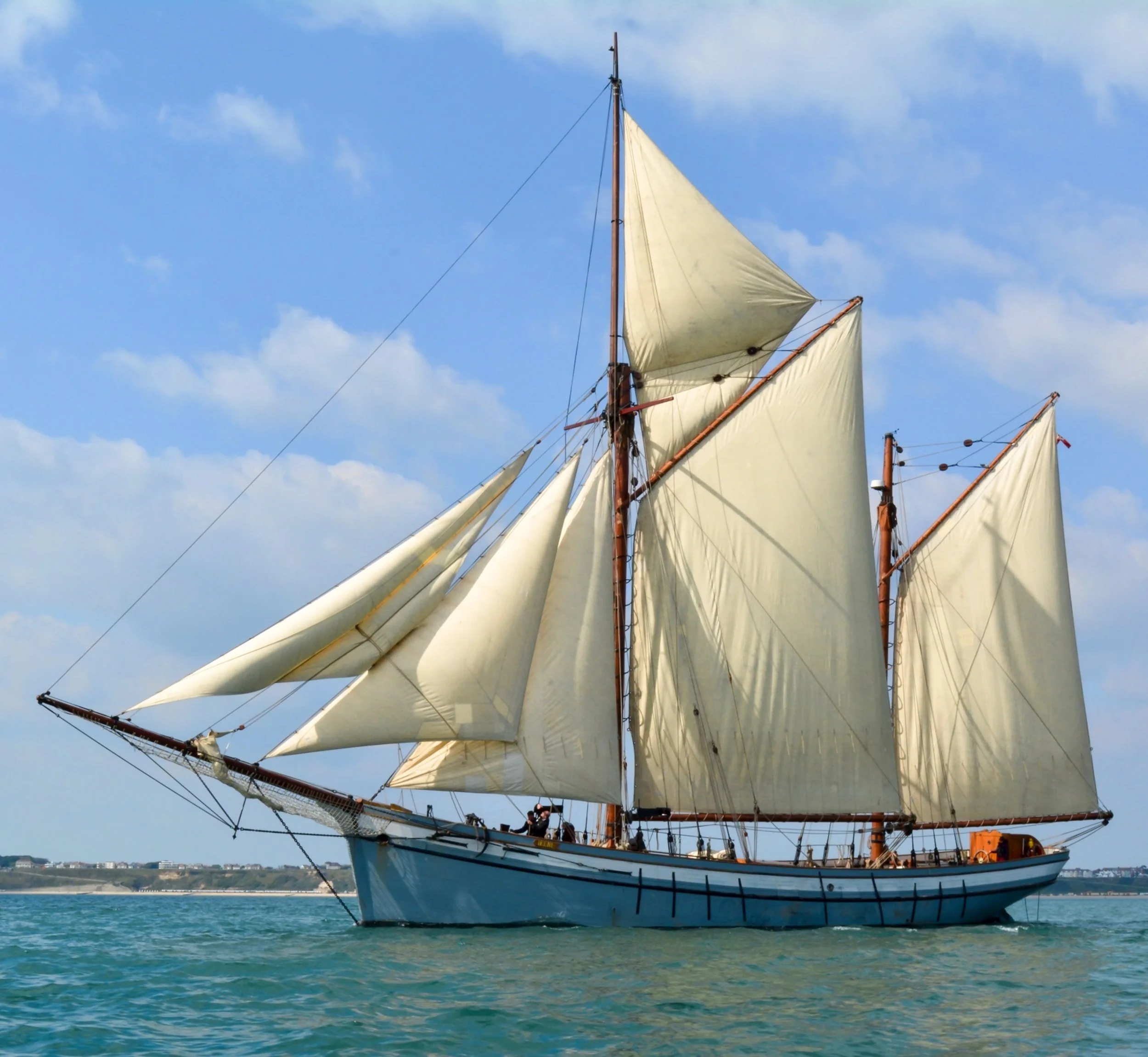
Meet Irene
Irene is an historic wooden sailing ship. Built as a West country trading ketch in 1907, co-incidentally she was launched in the same year as the invention of synthetic plastic.
This class of vessel was a cargo ship of heavy timber construction and she displaces 200T. Her seaworthiness, strength of construction and cargo bearing capacity make her a perfect fit as a plastic collection vessel.
A fitting solution from the past to help tackle an issue of the present.
She has recently been restored, has MCA Code Certification and is fully operational.
There is an obvious ecological benefit in using an existing vessel and particularly a sailing vessel to access these remote locations.
AREA OF OPERATION
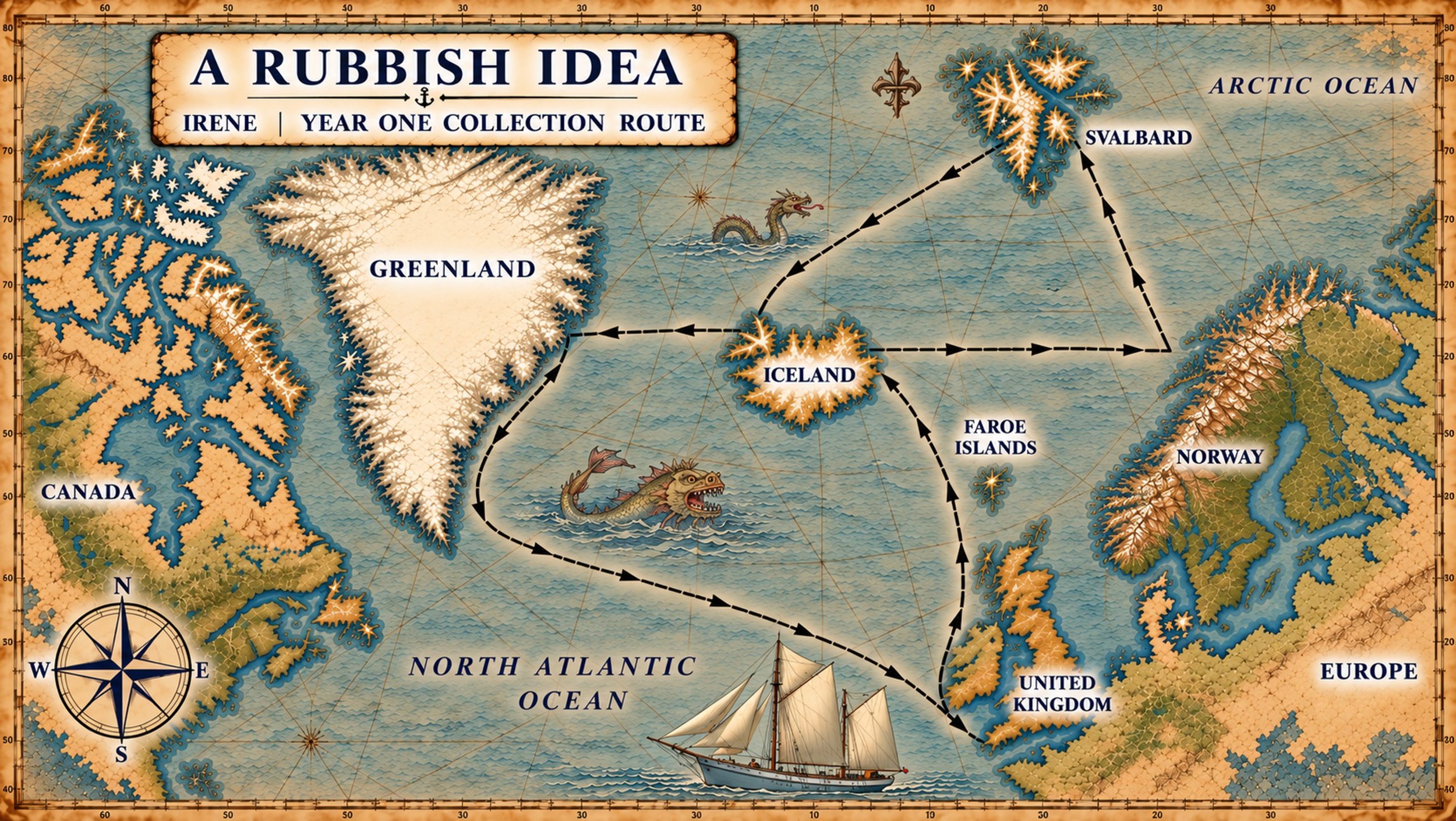
Irene will cruise in the European Arctic.
Please note that this route is indicative only.
Sailing course will be based upon weather and up-to-date scientific information on remote waste accumulation sites from our in-country partners.
THIS PROJECT WILL BE USED BY LEADING EXPERTS
TO LEVERAGE CHANGE AT INTERNATIONAL LEVEL
The publicity and data the expedition generates will be used as leverage by influential specialists connected with the project, as part of wide ranging and world leading work on United Nations Sustainable Development Goals. This includes presentation and lobbying at COP, United Nations and G7 summits, to address marine plastic pollution on a global scale.
Donators, sailors, scientists; we are collaborating in order to leverage change at government level.
The notion may be romantic; the result is tangible.